Celebrating Chinese Spring Festival and the Seasons of Life

February 3rd, 2011

pagodaAs we here in Milwaukee dig out from a blizzard, many of us look forward to spring and the end of snowstorms.  Ironically, yesterday’s record setting storm fell on a day that is supposed to provide the key to the severity of the remaining winter–Groundhog Day.   It was also the beginning of the Chinese Lunar New Year’s “Spring Festival.”

The festival, the most important of the traditional Chinese holidays, begins on the first day of the traditional Chinese calendar.   Chinese New Year customs focus on food, gifts called “red envelopes,” lanterns and in San Francisco’s Chinatown, parades.  They celebrate what people have believed in the most this past year.

Chinese rituals are often reflective and respectful of past traditions. We at Krause Funeral Homes see that in beautiful Chinese American funeral celebrations.

Many Chinese Americans place a great deal of importance on the details surrounding the death of their loved one.
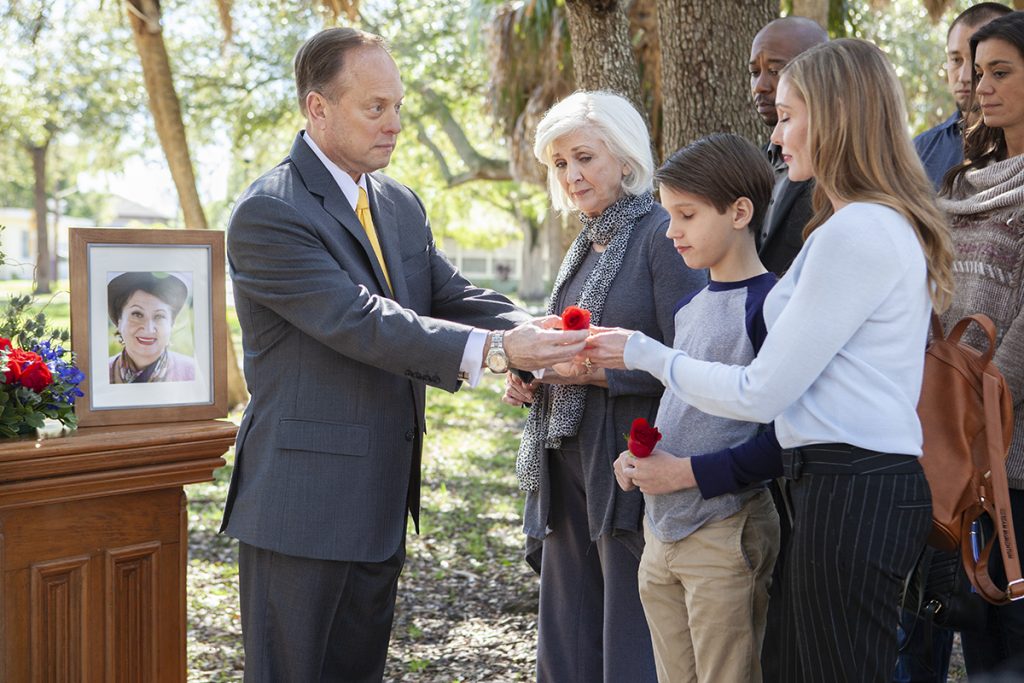
Family gatherings are more than special times to focus on the life of their loved one, they often include a specific set of rituals to be carried out in respect for their elders.  Wreaths, gifts and a portrait or photograph of the deceased may be placed at the head of a loved one’s casket.   Others orchestrate colorful, musical funeral processions combining Chinese and American traditions.   Some provide family and friends with pieces of candy to sweeten the bitterness of death.  Even after the funeral is long over, rituals may dictate that families gather at the cemetery to beautify gravesites, provide elaborate food or burn paper offerings.

Krause Funeral Homes celebrates the ethnic diversity of our community by offering a wide variety of options to meet the special religious and cultural traditions of families.

No matter what groundhogs were able to see yesterday, we look forward to spring and continuing to celebrate the seasons of life.

How To Help a Grieving Friend “Move On”

January 31st, 2011

oldmancuteDebbie R. asks “when you see someone who has experienced the death of a loved one should you ask how she is feeling and express your sympathy or is it best to ‘move on’ and try to have an everyday conversation?”

While every person handles grief differently, here is what Nichole Schwerman, Bereavement Coordinator at Children’s Hospital of Wisconsin says.

“The worst thing you can do in that situation is ignore the death of your friend’s loved one. Most bereaved individuals find comfort in the fact that others remember their loss, especially as time goes on. Mentioning the death and sincerely inquiring about how he or she is feeling will not make him or her MORE sad. On the contrary: it shows you care and it opens the door for your friend to talk about it if he or she wants to. Follow your friend’s lead and make it known in your words or actions that you are available to talk and listen.”

Some conversation starters include “I was thinking about (name of bereaved) and how (share a story)…” and “tell me a story about…”  If all else fails a simple”Know that you have been in my thoughts and prayers” works.

Schwerman also writes “Months after the death, when everyone else’s lives have gone on, many bereaved people feel left behind and forgotten. Grief doesn’t end at three months or six months; remembering what he or she is continuing to go through will most likely be healing and comforting.”

For more information on funeral etiquette click hereContact us for further information.

Grieving the Loss of a Beloved Pet

January 25th, 2011

parkKaren’s 12 year-old dog “Badger” died yesterday and prompted this post.  It is of course natural to experience grief when a family member dies, but what if that family member is a beloved pet?

For many the grieving process over a deceased companion animal is the same as with a human companion.  We love our pets and consider them members of the family.  We care for them, talk to them and celebrate their birthdays.  Even those who have talked about the burden of caring for their pet often find the loss traumatic.  If nothing else, the death creates a change in everyday life.

However, friends and family may not understand or comfort someone who has lost “just” a pet.  And this may make grieving more complicated.  Below are some tips from the experts on dealing with the death of a pet.

How to Help Friends and Family

Acknowledge the loss and express your sympathy. Drop a note, make a call, stop by–let them know you are thinking of them.


A good listener can put people at ease during times of grief. You may want to ask:

“What happened?”

“Tell me a good story about…”

“When did you last see…?”

Cliche’s like “you’ll feel better soon” or “you can always get another cat” are not helpful.

Stay in Touch. It is very important to stay in touch after the death of a pet as milestones like birthdays and holidays are often difficult for those experiencing a loss.

Helping Children Express Grief

The loss of a pet may be a child’s first experience with death–he or she may feel guilt, sadness or fear.  He or she may be angry with him/herself, family members, or the veterinarian for not being able to save the pet.


Children need to know that it is healthy to talk about death. Encourage open dialogue and the freedom to express opinions and feelings. Don’t be afraid to answer questions with “I don’t know the answer, but I’ll get back to you on that.” Consistent attention from caregivers and time are also important to help children come to terms with their loss.  It’s a good idea to find out what your child already knows and validate any feelings he or she may express. Then tell the story simply and honestly.

Explain how you might feel when your pet dies—sad, mad, confused—and that it is OK to cry or want to talk or need time alone. Children learn by example, so don’t hide your own feelings. Showing your own grief gives children permission to show theirs, while holding grief back may inadvertently teach children to suppress their own sad feelings. You may also want to explain that while remembering your pet’s life, it is normal to also laugh at funny stories.

Many report that setting aside some special time to acknowledge the loss, pay tribute and share memories is helpful. Whether you have a funeral or a ritual of your own making, encourage children to participate.  They may find drawing pictures, writing stories or putting together a collage or scrapbook a positive way to express their emotions.

There are also books like When a Pet Dies, by Fred Rogers or I’ll Always Love You by Hans Wilhelm that may help.

Helping Seniors Experience a Loss

Seniors may find coping with the loss of a pet especially hard. If they live alone, they may feel a loss of purpose more than others.   Or the pet’s death may be a reminder of other loved ones’ deaths.  Getting another pet is also a more complicated decision for seniors as this loss may trigger thoughts of their own mortality and whether or not they will be able to care for a new pet.  Experts report that they often see great benefits when friends and family simply spend time with a grieving senior and help him or her find a bereavement group if necessary.

Helping Yourself Cope with the Death of a Pet

The first step to feeling better is realizing that it is natural that you feel anger, guilt or sadness and grieve the loss. Some find friends, books, local or online bereavement groups and/or support hotlines to be helpful.  Your veterinarian, local animal shelter and the web may help you find local pet loss support groups and coping information.  As with children dealing with the loss of a pet, adults often find it helpful to set aside some special time to acknowledge the loss, pay tribute and share memories.

Contact Krause Funeral Homes for more information.

Does Paying for Funeral Services Now Save Money?

May 6th, 2010

dollllar2_2Bill R. asks "Can I save my family money by paying for all of my funeral services before I die?"

It's possible. If you choose to have funeral home services and merchandise guaranteed with a funeral contract it is called "prefunding a funeral." At Krause Funeral Homes a written contract guarantees that there will be no hidden or additional costs for the funeral arrangements you choose and removes the possibility that grieving or guilt-stricken family members will feel the need to overspend. And your contract is portable—in the event you move, the plan and funds are yours to use at whichever funeral home you desire. A prefunded funeral can also provide real benefits if applying for Medicaid.

Here's how it works: When you prefund a funeral you and your certified preplanner will put the details of your wishes in writing—including specific services and manufacturer and model of the merchandise you choose.

At the time of death that detailed list will be compared with a current price list to gather current costs. If at the time of death the cost of services and merchandise chosen is MORE than the value of the policy, the funeral home will cover the difference. In that way you are guaranteed the service and merchandise you chose at no additional cost to you.

If after comparing the current costs with the value of the policy the total is LESS than what is in the policy, the excess money goes to the family.

We cannot guarantee “Miscellaneous” fees, as they have nothing to do with the funeral home. For example, we have no control over the increase in costs or the amount the family may want to spend for newspaper death notices, flowers or the cost of the luncheon or cemetery plot.

For additional information on preplanning funerals click here or contact us.

*For privacy reasons, we have changed the names of the people who have asked questions.

Arbor Day

April 29th, 2010

Girl Holding PlantIn celebration of Arbor Day this Friday, many will take steps to keep our Earth green. Planting trees is certainly a positive step; trees provide shade, harbor wildlife and help beautify a yard. But they do much more than that.

Reduce Stress

Primitive carvings and drawings tell us that early civilizations valued plants for more than their shade and fruit. They planted sacred and formal gardens and groves for their beauty. Today we know that the aesthetic qualities of trees provide health benefits too. Texas A&M's Dr. Roger S. Ulrich reported that visual exposure to settings with trees produced significant recovery from stress within five minutes, as indicated by changes in blood pressure and muscle tension.

Improve Air & Water Quality

Many already know that trees improve the air we breath by absorbing pollutants and carbon dioxide. According to the U.S. Department of Agriculture, one acre of forest absorbs six tons of carbon dioxide and puts out four tons of oxygen every year.

Trees also help keep our drinking water clean. Here in Milwaukee there is a movement to reduce the amount of rainwater that gushes into our city's sewer system, especially after large rains. When sewers get full, they overflow and potentially pollute lakes and rivers. As Milwaukee is nestled next to one of the largest freshwater lakes, Lake Michigan, this is especially important. Trees soak up more water than asphalt or grass. They are an integral part of improving Milwaukee's water quality. In fact, it is estimated that the city's trees reduce storm water flow by 22%. Trees currently make up 16% of the city's canopy cover and the goal is to increase it to 40%.

Help Celebrate a Life

At Krause Funeral Homes we've helped families plant trees as living memorials. Some choose to help restore or create a forest with seedlings planted in memory of their loved one. Others find comfort in planting a tree in a favorite place. A tree symbolizes the natural circle of life and can help the grieving process by providing something beautiful to nurture. We also provide reasonably priced living plant and tree options for people to send to grieving family and friends.

These are a few of the ideas we offer when helping families celebrate the life of a loved one. Krause Funeral Homes' Directors concentrate 100% of their focus on listening and assisting families prepare meaningful tributes. They are trained beyond state requirements with in-depth courses on sensitivity, ethics and ways to create meaningful, personal services.

Whether your goal is to help a grieving friend or just provide a shady spot for summer naps, planting a tree is a great way to help future generations benefit from a green planet.

Contact us for more information.

Driver Safety Class March 24th

March 17th, 2010

Cars have changed and so have traffic rules. Krause Funeral Homes invites you to learn more about the new rules of the road as well as defensive driving techniques, tips on navigating problem situations and how to use anti-lock brakes and air bags. The class is taught by a certified AARP instructor who charges $14 per person ($12 for AARP members).

To learn more or RSVP stop by, call or drop us an email. Click here for contact information.

Funeral Timing–It’s All Relative

March 12th, 2010

clock-thumb3957191Albert Einstein, one of the best know and most influential scientists, was born 131 years ago this Sunday. He was awarded a Nobel Prize, founded the major concepts of modern Physics and made hundreds of scientific contributions that are so complex that most of us do not fully understand their meaning. He was, and still is, a part of pop culture. The name "Einstein" and depictions of his distinctive wild hair and wide-eyed look are often synonymous with "genius."

According to a 1939 article in The New Yorker he became so popular that he was often stopped on the street and asked for an explanation of "that theory.” He eventually figured out a creative way to end those conversations by replying “Pardon me, sorry! Always I am mistaken for Professor Einstein.”

Einstein changed how Physicists used time in theories. Among other things, "that theory" Einstein was incessantly asked about postulated a new way of thinking about space and time–as two aspects of a unified whole.

Funeral Directors are also often asked about timing. Many ask "how many days after the death of a loved one should a funeral take place"? We’re not sure how Einstein would have responded, but at Krause Funeral Homes we’ve been answering that question for over 75 years.

Some religious guidelines dictate that services take place as soon as possible after a death starting with a purification ceremony or by praying and watching over the deceased. For other cultures, it is customary to wait a week or more. For many, there are no guidelines.

While natural instinct pushes us to have a funeral soon after a death occurs, we see a dramatic difference between families who rush to plan and complete a funeral in a few days and those who take more time to consider how to celebrate their loved ones’ lives.

With at least 100 details to coordinate, families who take the time to think through decisions are able to plan meaningful funerals and they themselves seem more relaxed.

Whether a funeral is planned in a day or a week, Krause Funeral Homes’ expert directors will help create a one-of-a-kind service that truly reflects the personality and interests of your loved one. In the words of Albert Einstein, “Not everything that counts can be counted, and not everything that can be counted counts.”

Contact us for more information.

Dr. Seuss and Krause Funeral Homes Agree: Kids Learn Much From Animals

March 2nd, 2010

images-3School kids around the world celebrate all things Dr. Seuss today, as he was born on this date 106 years ago. Kids will don funny accessories to emulate the Cat in the Hat, dine on delicacies like Green Eggs and Ham and hopefully read a famous tale or two as part of Read Across America, an initiative created by the National Education Association. Dr. Seuss, whose given name was Theodor Seuss Geisel, was known as a jokester and for his unique use of funny animals as reading enticements.

Why the Nom de Plume?

In college at Dartmouth, Geisel was editor-in-chief of a humor magazine. After being caught drinking gin with friends (which violated national prohibition laws at the time), he was asked by school administrators to quit all extracurricular activities. Geisel did not want to give up writing for the humor magazine that he so loved and instead began signing his work with the pen name “Seuss.”

Silly Seuss

Milwaukean Stacy Sullivan reports that her grandfather, Stanton Kinnie Smith from Rockford, Illinois, knew Geisel at Dartmouth. Her grandfather shared stories of how Geisel was a practical joker. He liked to go to a park near campus, probably to sketch the animals he would later create caricatures of. One day, a police officer blew his whistle and accused Geisel of stealing public property–Geisel was carrying a bench out of the park. He surprised the accusing officer by asking him to examine the underside of the bench. After inspection, the officer learned he’d been duped–Geisel owned the official park bench replica carried it with him as a joke.

Thing One and Thing Two Are Not All Fun and Games

A May 1954 Life magazine report on illiteracy concluded that children were not learning to read because their books were boring. A list of 250 words important for first-graders to recognize was created. Geisel was hired to write a book “that children can’t put down”–using only those words. Geisel turned to humor, animals and trisyllabic meter. Nine months later, The Cat in the Hat was created using 236 of those words. Some say it is the most popular “beginning to read” book ever published.

The Power of Animals

Geisel’s love of animals probably stems from growing up as a zoo superintendent’s son. He often sketched the animals entrusted to his father’s care, but added twists not usually found in nature. It is reported that he liked to add body parts to his animals–an extra tail or limb–even at a young age. In all of Geisel’s children’s books, crazy-looking animals are featured. Their wacky twists make kids laugh, smile and want to read on. But they also often model traits like dedication and love. He knew the power that animals have on kids and used it to teach kids to read.

Krause Funeral Homes knows that children often respond well to animals too. We offer dove & butterfly releases that can signify the end of the funeral or the circle of life.

oliver2Oliver, Krause Funeral Homes’ trained, on-staff therapy dog, is a hit with children; and for many, petting or hugging Oliver has a calming effect and triggers happy memories. He is a hypoallergenic Portuguese Water Dog and has completed Canine Good Citizen and therapy dog training. In addition to attending funerals, Oliver often visits hospitals, nursing homes, hospices and children’s facilities as a community service. His presence at funerals is optional and free of charge.

While Oliver can’t comfort or teach with words, he can help break the ice, create a needed diversion and draw people out.

In the words of Dr. Seuss: “Sometimes the questions are complicated and the answers are simple.”

Click here for additional information on children and funerals or to contact us.

Olympic and Funeral Flower Philanthropy

February 25th, 2010

Flower arrangements are a part of so many traditions: weddings, funerals and even the Olympics. Winning athletes are given bouquets of flowers before they are given their medals. In Beijing athletes received roses; Turin Olympians were given groupings of azaleas, rhododendrons and camellias. In British Columbia the green mum and hypericum berry bouquet beat out 57 other arrangements–and not just because green mums are indiginous to Canada, have little fragrance and a low pollen count (lessening the chance for Olympian allergic reaction). The winning arrangement has a nifty philanthropic angle.

Winning bouquet designer June Strandburg not only creates beautiful arrangements, but teaches floristry to women who have have been victims of violence or are turning their lives around after substance addiction or a prison stay. Strandberg’s program even helps with job placement. All 22 people creating the 1,800 official Olympic bouquets are graduates of her program.

Flowers and philanthropy can be a part of funeral traditions too. After funerals, families choose where flower arrangements should be delivered. Most take flowers home or leave them at a house of worship.

As part of their signature services, Krause Funeral Homes funeral directors take photos of all arrangements and cards and give them to familes for keepesake and thank you note purposes. Then families are offered the option of having some or all flowers delivered free of charge to wherever they choose (afterall, who wants pollen messing up a car?). Funeral Directors make suggestions like choosing to brighten the community room at the former retirement facility of their loved one.

Some organizations take it a step further. According to Sandy Wals at Luther Manor Retirement Community in Wauwatosa, WI, residents in their Floral Group take donated arrangements apart and then spend a relaxing hour or two enjoying each other’s company and honing their skills at floral arranging. Finished pieces are used as centerpieces, special gifts, etc. Those flowers work hard: they comfort a grieving family, provide enjoyment to a group of seniors and then brighten someone’s day. Without deliveries from Krause Funeral Homes and others, there would be no club. And while International Olympic Committee rules require bouquets to be no larger than 30 cm. by 25 cm., Luther Manor’s Floral Group can can enjoy creating arrangements of any shape or size.

Safe Driving Techniques for Seniors

February 22nd, 2010

snow sceneThe recent snow dusting here in Milwaukee creates breathtaking, picturesque winter scenes. But, it also makes roads more dangerous; especially for the youngest and oldest drivers.

The U.S. Department of Transportation's National Highway Traffic Safety Administration reports that drivers over age 75 are more likely to be involved in fatal accidents than any other age group—except teenagers. And, in the next 15 years, a fourth of all drivers in the U.S. will be 65 or older according to a University of Florida study.

Many, such as officials in states like Florida and groups like AARP, are providing classes to help older drivers. Not only do attendees report that they are more knowledgeable drivers because of the classes; but, the successes have prompted some insurance companies to provide discounts to those who take these accredited classes.

A recent NPR story reports that older drivers may not notice how much they have changed physically, how much driving has changed and what they can do to adjust.

The NPR story features Senior Transportation Consultant Fran Carlin Rogers, who does “car fits” for older drivers, and reports that a common mistake has to do with mirrors. “The way mirrors are recommended to be positioned now [is] dramatically different than the way all of us learned to drive because the roads are so much more complicated,” says Rogers. “There’s much more traffic than [when] we were young drivers." She also checks to see that clients aren't “sitting too far forward…to make up for getting a little shorter” and provides solutions for clients who can't reach seatbelts and therefore aren't wearing them.

Choosing safe roads may also be part of the solution. Sherrilene Classen of the University of Florida’s Institute for Mobility, Activity and Participation (or I-MAP) says that studies show older-driver-friendly roads have the following common elements:

  • wider road shoulders
  • protected left-turn lanes
  • green arrows to give drivers the right of way

To learn more about new rules of the road as well as defensive driving techniques, tips on navigating problem situations, how to correctly use mirrors, anti-lock brakes, air bags and more consider taking an AARP accredited class like the one below.

Driver Safety Program

Wednesday, March 24, 2010 8:30am-12:30

Krause Funeral Homes

12401 W. National Avenue, New Berlin

To learn more or RSVP click here.

The class is taught by a certified AARP instructor who charges $14 per person ($12 for AARP members).